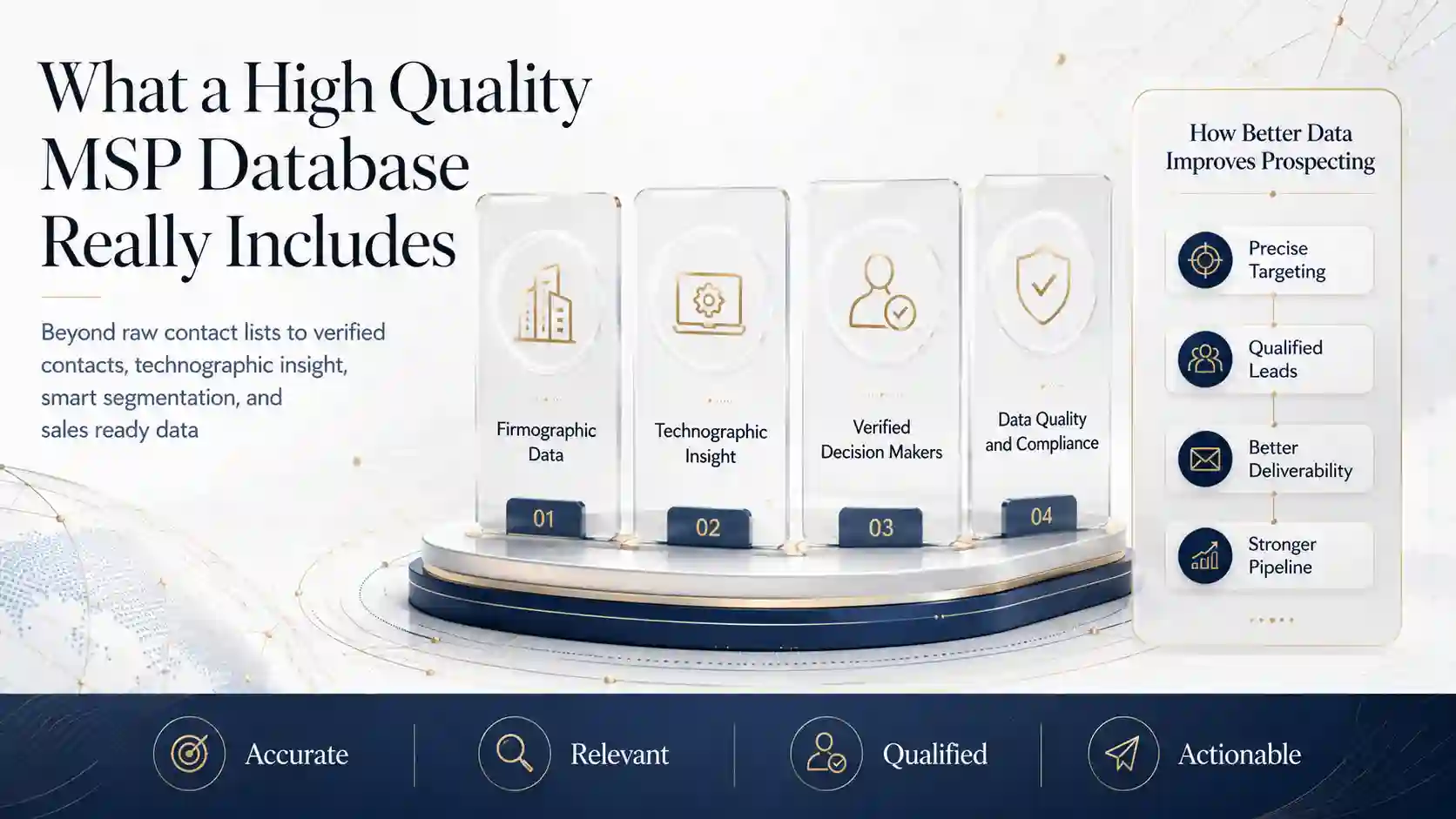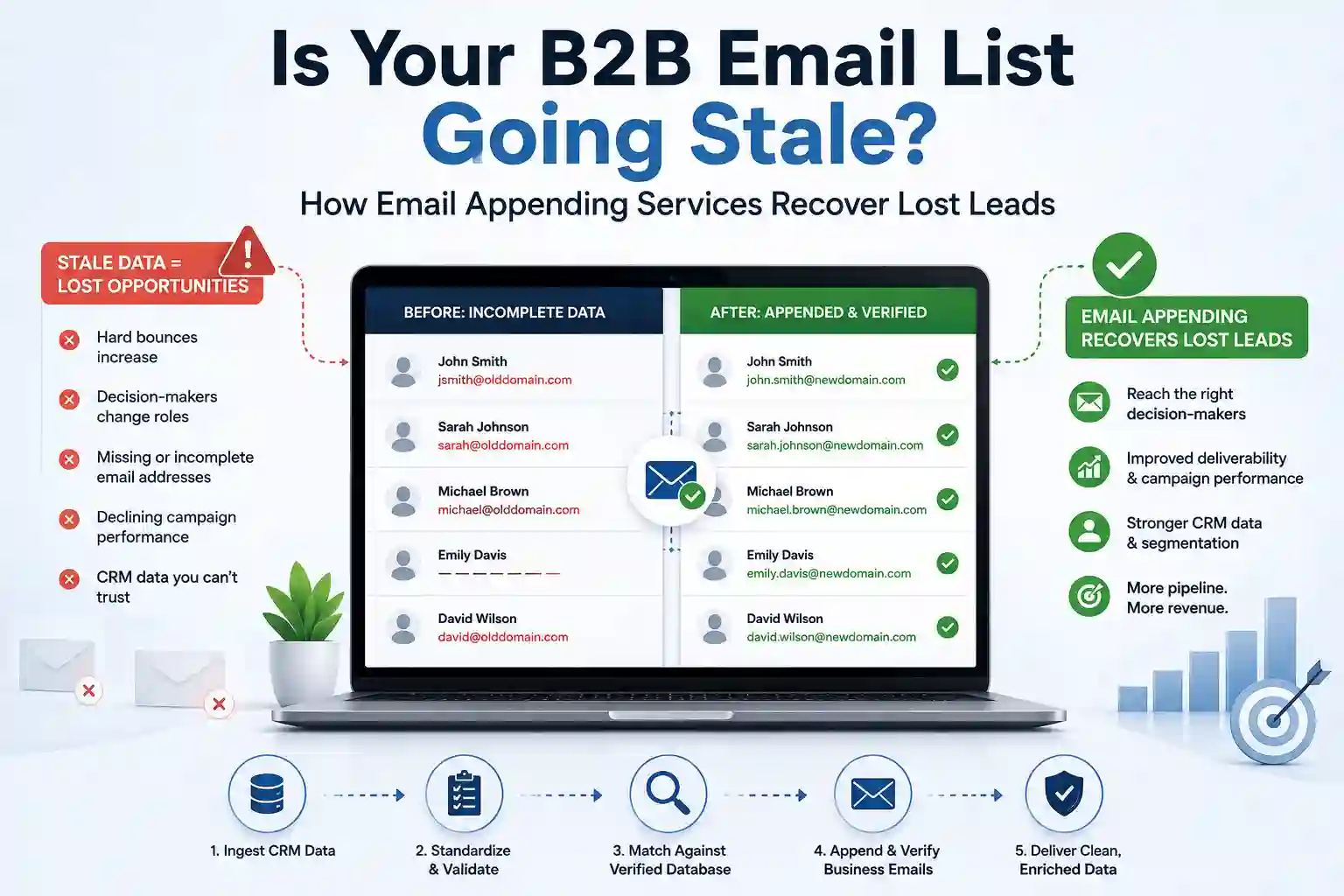
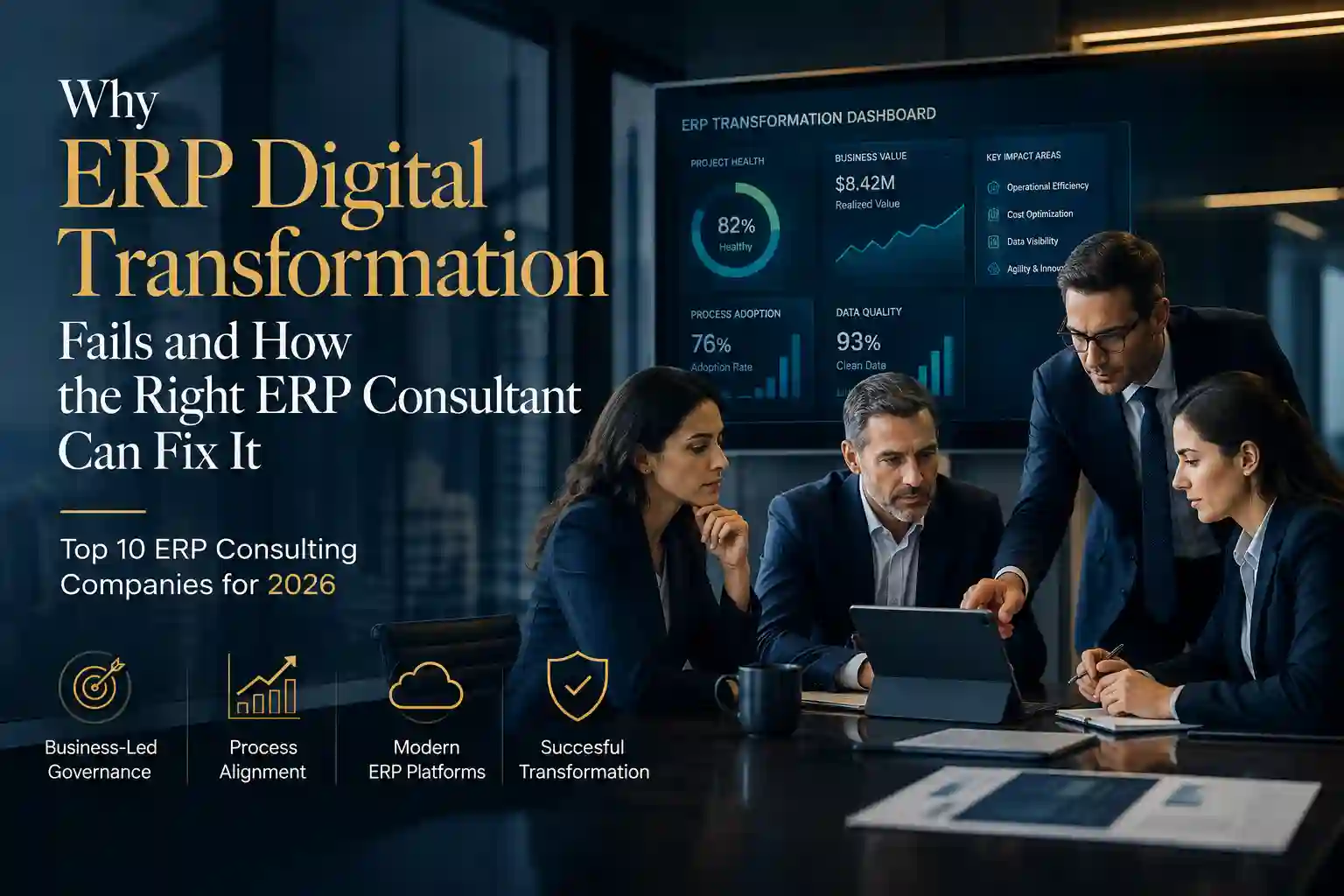
Enterprise resource planning failures are rarely caused by the software itself. When a massive integration stalls or budgets spiral out of control, the root problems usually emerge months earlier through poor process decisions, weak program governance, unrealistic scope, dirty data, or an incorrect transformation strategy. This is where an experienced ERP consultant can make a critical difference by identifying operational risks early, challenging inefficient legacy processes, and aligning the transformation with clear business outcomes. Systems like SAP S/4HANA, Oracle Cloud ERP, and Microsoft Dynamics 365 operate on highly standardized operational practices, but organizations routinely try to force these modern platforms to mimic their outdated legacy processes. This fundamental clash between standardized software and entrenched corporate habits creates a dangerous reliance on excessive customization. Without strict executive ownership and the right ERP consulting guidance to manage this friction, implementation partners and internal IT teams are often left trying to code their way around organizational resistance.
Why Does ERP Digital Transformation Fail?
Organizations frequently confuse buying software with changing how they work. Replacing an aging legacy platform with a cloud equivalent is a migration. Rebuilding the operating model to take advantage of automation, real-time analytics, and unified data structures is an ERP digital transformation. Treating these entirely different strategic exercises as the same project is the fastest route to failure.
When companies approach a complex transformation as a basic software installation, they delegate ownership to the IT department rather than business leaders. A July 2025 McKinsey report on getting ERP transformations back on track highlighted that successful recoveries require realigning the program around business value rather than technical delivery. IT can install software, but IT cannot dictate new procurement workflows, redefine supply chain dependencies, or force the finance department to adopt standard reporting structures.
Major failure points typically follow a predictable pattern:
- Lack of business-led governance: When business unit leaders abdicate responsibility, IT is forced to make functional decisions. Because IT lacks the authority to mandate process changes across departments, they approve custom code to accommodate legacy habits. This increases cost, extends timelines, and complicates future upgrades.
- Unrealistic scope and schedule: Companies routinely underestimate the time required to clean master data and redesign processes. Unrealistic deadlines force project teams to cut corners on user acceptance testing and change management, pushing the actual pain of transformation onto the end-user immediately after go-live.
- Carrying legacy complexity into new platforms: The most damaging phrase in an enterprise technology project is “that is how we have always done it”. Rather than adopting the standardized processes built into modern platforms, businesses spend millions configuring a new system to behave exactly like the broken system it is replacing.
- Consultant and vendor misalignment: Often, the systems integration partner is incentivized to bill hours rather than challenge bad client decisions. If an internal steering committee demands a highly customized workaround, a passive implementation partner will simply build it, compounding the project’s technical debt.
What Is ERP Digital Transformation Really Supposed to Change?
The core objective of an enterprise program is to unify fragmented data and standardize operations across an entire organization. A true erp digital transformation goes beyond moving servers to the cloud; it changes how a business makes decisions, allocates capital, and serves customers. It requires dismantling siloed operations in finance, supply chain, manufacturing, and human resources to create a single source of truth.
The relationship between erp and digital transformation is foundational. You cannot build advanced digital capabilities, such as predictive supply chain modeling or automated financial close cycles, on top of disjointed legacy applications holding inconsistent master data. The ERP acts as the central nervous system for broader digital initiatives. Without a stable, unified core, peripheral digital projects like AI-driven forecasting tools will simply ingest bad data and produce faster, automated mistakes.
Firms actively tracking ERP software data understand that adoption rates and project success vary wildly depending on how well the chosen platform aligns with the organization’s specific industry vertical. DiscoverMSPs frequently analyzes these deployment patterns, and the intelligence consistently shows that the most successful projects prioritize process alignment over technical customization.
For example, a global manufacturer struggling with inventory visibility across twenty facilities does not just need new software; they need new inventory control processes mapped to the software’s capabilities. The internal friction generated by these operational changes is massive. Business units will inherently fight to retain the processes they know, and internal project managers rarely have the political capital to overrule department heads. This dynamic is exactly where an experienced erp consultant changes the trajectory of a program. Rather than acting as a simple order-taker for the IT department, a strategic advisor acts as the necessary friction point between what the business wants to keep and what the business actually needs to change.
What Does an ERP Consultant Actually Fix?
An ERP consultant resolves the operational and technical disconnect between standard enterprise software and how a business actually runs. Rather than merely configuring tables or writing custom extensions, an effective advisor evaluates whether a proposed workflow genuinely creates commercial value or simply preserves inefficient habits. Their job is to de-risk the program by establishing rigorous governance, defining realistic business requirements, aligning architecture with business strategy, and preventing uncontrolled scope expansion.
The marketplace often blurs the distinction between different service providers, leading to mismatched expectations during procurement:
- Independent ERP advisors: Strategy-focused specialists who do not sell software or bill for offshore developer hours. They operate strictly on the client side, managing software selection, total cost of ownership modeling, contract negotiations, and objective program oversight.
- ERP implementation partners and systems integrators (SIs): Large technical delivery firms contracted to build, configure, integrate, and deploy the chosen software. Their primary commercial incentive is staffing utilization and delivering against a scoped Statement of Work (SOW), not necessarily challenging a client’s flawed operational assumptions.
- Software vendors: The platform owners, such as SAP, Oracle, or Microsoft, whose primary objective is selling annual recurring cloud licenses, subscriptions, and platform consumption.
- Transformation consultants: Business strategists who redesign enterprise operating models, target architecture, and commercial workflows, typically working alongside systems integrators to ensure technology directly supports specific corporate objectives.
A skilled erp consultant works across the full project lifecycle, from discovery and business process mapping to solution architecture, data migration strategy, integration governance, user acceptance testing, cutover, and post-go-live stabilization. Because no single individual possesses every discipline, enterprise buyers typically assemble specialized teams where technical architects, functional leads, and organizational change managers focus on their respective domains under unified program governance.
When Should a Company Bring in an ERP Consultant?
An organization should engage an independent advisor long before signing a binding software contract or implementation agreement. Bringing in advisory expertise during early discovery ensures requirements reflect genuine business needs rather than an unvetted wish list compiled by department heads. Independent advisors evaluate software capabilities objectively, establish baseline total cost of ownership estimates, and structure vendor contracts with clear milestone protections.
Hiring advisory support only after a project enters crisis severely limits available recovery options. By the time a company experiences consecutive missed milestones, budget exhaustion, or open disputes with a systems integrator, substantial capital has already been sunk into flawed architecture or custom code. While an experienced consultant can conduct a program turnaround, retrofitting governance and redesigning core data models midway through a deployment costs considerably more than establishing proper controls from day one.
Enterprises frequently seek external expertise when preparing for complex platform transitions, scoping complex integration environments, or navigating specialized partner ecosystems. Research platforms like DiscoverMSPs maintain dedicated directories of ERP and digital transformation consultants, helping enterprise technology buyers identify qualified domain specialists based on market intelligence rather than vendor marketing collateral alone. Similarly, teams planning enterprise modernization often utilize custom technographic research to analyze peer adoption patterns, implementation timelines, and platform dependencies across comparable industries before finalizing vendor shortlists.
Seven Warning Signs Your ERP Transformation Is Going Off Track
Early intervention depends on recognizing organizational dysfunction before it results in a public implementation delay or financial write-down.
- Design decisions are continuously reopened: Key stakeholders repeatedly debate foundational process designs months into the build phase, signaling absent executive authority and weak initial alignment.
- Milestones move while activity metrics appear green: Steering committee dashboards show high task completion rates and full resource utilization, but actual end-to-end process testing milestones slip.
- Custom development requests multiply exponentially: The technical backlog grows with bespoke extensions designed to preserve legacy processes, directly undermining the standardized best practices of the core platform.
- Data governance and cleansing are deferred: Program leaders treat legacy data migration as a late-stage administrative task rather than an immediate, ongoing technical discipline.
- Testing defects are pushed to subsequent phases: Unresolved high-severity defects from unit testing or system integration testing are carried into user acceptance testing to maintain an artificial schedule.
- No agreed baseline for business KPIs: The project tracks software deployment milestones exclusively without measuring target operational improvements, such as reduced inventory holding costs or shortened financial close windows.
- Change management is reduced to end-user software training: The organization treats business transformation as a generic training exercise scheduled two weeks before cutover, ignoring necessary operating model shifts and job redesign.
As McKinsey noted in their July 14, 2025 analysis, “Getting an ERP Transformation Back on Track”, recovering a distressed program requires shifting leadership attention away from sheer activity tracking and refocusing directly on validated business outcomes. When project reviews report hours billed and tickets closed instead of measurable operational readiness, the transformation is in jeopardy.
How Should You Evaluate an ERP Consultant Before Signing a Contract?
Selecting an advisory partner determines the entire trajectory of an enterprise transformation. The market is saturated with implementation firms presenting themselves as strategic advisors, but a strict evaluation framework separates genuine transformation capability from simple software configuration. Evaluating a consultancy requires examining how they manage risk across several core dimensions.
Platform depth is non-negotiable. Whether an organization is deploying SAP, Oracle Cloud ERP, Microsoft Dynamics, NetSuite, or Infor, the consultant must possess deep technical and commercial experience specific to that environment. Every platform has unique data models, integration constraints, and licensing structures that dictate architectural decisions. However, platform knowledge alone is insufficient without deep industry experience. A consultant who understands Microsoft Dynamics in a professional services context may lack the supply chain optimization expertise necessary to deploy the same software for a heavy manufacturing or distribution enterprise.
The most critical differentiator is the firm’s ability to challenge the client’s assumptions. As outlined in Oracle’s guidance on what constitutes a successful ERP implementation, mitigating risk requires thoughtful planning by experienced resources who understand not just the technical aspects, but how to navigate business process alignment. If a consultant simply agrees to build every requested legacy workflow into the new platform without pushing back on process redesign, they are acting as order-takers, not advisors.
Evaluating their data migration methodology and integration architecture capability is equally important. Data is rarely clean, and legacy systems rarely integrate easily. A consultant must present a clear, phased approach to data governance that prevents dirty data from infecting the new environment.
Furthermore, assess their governance model, independence, and commercial incentives. Does the firm benefit financially from extending the timeline or selling additional proprietary bolt-on software? A trustworthy advisor aligns their commercial success with the client’s operational metrics, offering robust post-go-live support and integrated change management and user adoption strategies that ensure actual workforce alignment, rather than just technical deployment.
Questions to Ask an ERP Consulting Company Before You Shortlist It
Procurement leaders must move beyond standard request-for-proposal templates and interrogate how a consultancy actually behaves under pressure. The answers to these procurement-grade questions reveal a firm’s true delivery culture:
- Which parts of the proposed solution use standard ERP functionality and which require custom development? A high ratio of custom development indicates high long-term maintenance costs and upgrade friction.
- What assumptions could materially change your implementation estimate? This forces the consultancy to expose the hidden risks they foresee in your internal structure.
- Who owns data cleansing, transformation, and reconciliation? If the consultancy assumes internal client teams will handle this entirely, expect severe delays prior to user acceptance testing.
- Which members of the pitch team will actually remain on the project? It is common for senior partners to sell the engagement before handing delivery over to junior associates.
- How are design disagreements escalated? You need to know exactly what happens when an internal department head refuses to adopt a standard process.
- What would make you advise us to delay go-live? A consultant afraid to halt a failing deployment is a liability.
- How will benefits be measured after deployment? This separates firms focused on cutover dates from those focused on business outcomes.
- What is excluded from the statement of work? Ambiguity here inevitably leads to expensive change requests.
- How do you handle integration dependencies outside your direct control?
- What percentage of the proposed team has delivered comparable transformations?
The most revealing answers are those where the consultant willingly identifies internal client weaknesses. If an advisory firm guarantees a seamless deployment without pointing out your organizational data debt or lack of executive alignment, they are selling an illusion.
Does the Biggest ERP Consultancy Automatically Make the Safest Choice?
Enterprise boards often default to the largest global systems integrators, operating under the assumption that a massive brand name eliminates implementation risk. This is a procurement fallacy.
Large consulting firms certainly offer undeniable advantages for massive multinational deployments. They provide global resources, established platform alliances, deep specialist benches, cross-border delivery models, and highly structured program management capabilities. When a Fortune 500 company is standardizing financials across forty countries, a tier-one global systems integrator is often the only vendor with the requisite scale.
However, scale introduces distinct trade-offs. The largest consultancies carry significantly higher billing rates and often rely heavily on offshore delivery models to protect their profit margins. Decision pathways can be slow due to layered internal governance, and the elite senior partners who pitched the vision may rarely appear during the actual build phase, leaving team composition to change rapidly after the sale. Furthermore, if your enterprise is not among their top-tier clients, your program may not receive their premium senior attention.
Specialist ERP consultants often perform better for mid-market enterprises or specialized divisions within larger corporations. Boutique firms typically offer flatter hierarchies, faster decision-making, and specialized industry depth. To understand these varied provider landscapes, organizations often rely on technology-specific market research to map vendor capabilities against their specific operational maturity. Utilizing platforms like DiscoverMSPs allows enterprise buyers to investigate provider intelligence and access targeted business and finance technology data to build informed shortlists.
The appropriate consultancy depends entirely on the chosen ERP platform, the organization’s size, industry vertical, transformation scope, geographic coverage, regulatory requirements, internal capability, and project budget. A firm that excels at deploying a cloud financial suite for a regional healthcare provider may lack the supply chain rigor required to implement a complex manufacturing platform. Establishing this exact fit based on objective operational criteria forms the foundation for identifying the advisory firms that consistently deliver measurable commercial value.
Top 10 ERP Consulting Companies to Evaluate in 2026
Transitioning from general evaluation criteria to actual market selection requires separating promotional capability from verified delivery history. The following list identifies 10 ERP consulting companies worth evaluating in 2026. This is not a universal ranking or a definitive league table. The appropriate choice depends entirely on the technology stack, project scope, and organizational maturity of the buyer. Whether an enterprise is operating in the USA, UK, Canada, or Australia, compiling a practical shortlist requires matching the consultancy’s specific delivery model to the company’s internal culture.
Procurement leaders utilizing the intelligence networks at DiscoverMSPs routinely rely on specialized directories of ERP and digital transformation consultants to identify firms with verified experience in their exact operational scenarios. Furthermore, analyzing insights from an ERP users database reveals that successful deployments correlate closely with selecting a partner that understands the deep nuances of the underlying platform architecture.
1. Accenture
Accenture is engineered for massive, multi-continent digital transformations. They excel when ERP modernization is tied directly to broader corporate restructuring, generative AI adoption, or new business model launches.
- Verified capabilities: Top-tier global alliances across SAP S/4HANA, Oracle Cloud ERP, Microsoft Dynamics 365, and Workday.
- Best suited to: Fortune 500 multinationals and large public sector organizations requiring simultaneous deployment across dozens of international jurisdictions.
- Check before signing: Their massive scale means smaller mid-market enterprise projects might not secure their elite senior architects. Ensure your statement of work locks in the specific personnel pitched during the procurement phase.
2. Deloitte
Deloitte approaches enterprise resource planning primarily through a finance and regulatory lens. They are highly effective at aligning new systems with complex tax structures, compliance mandates, and CFO-driven operating models.
- Verified capabilities: Deep specialization in SAP, Oracle, and NetSuite implementations, particularly for financial services and life sciences.
- Best suited to: CFO-led transformation programs where financial reporting, audit readiness, and enterprise risk management outweigh purely technical system upgrades.
- Check before signing: Their methodology is rigorously structured and governance-heavy. Fast-moving organizations seeking agile, rapid deployments may find their extensive documentation processes bureaucratic.
3. PwC
Recognized as a Leader in the 2026 Gartner Magic Quadrant for Cloud ERP Services, PwC effectively bridges business strategy with technical execution. They maintain a distinct advantage in mitigating the operational risk inherent in moving legacy systems to modern cloud architectures.
- Verified capabilities: Oracle Cloud ERP, SAP S/4HANA, Microsoft, and Workday ecosystems.
- Best suited to: Highly regulated industries such as healthcare and banking, where data security, strict compliance, and organizational change management must be handled delicately.
- Check before signing: Because they embed risk management deeply into their implementation methodology, baseline consulting costs can reflect a premium compared to pure-play technical integrators.
4. Panorama Consulting Group
Unlike the large systems integrators, Panorama does not sell software licenses or write code. They operate as completely independent, vendor-neutral advisors focused on software selection, contract negotiation, and client-side implementation oversight.
- Verified capabilities: Independent advisory spanning SAP, Oracle, Microsoft Dynamics, Infor, and NetSuite.
- Best suited to: Mid-market to large enterprises that lack internal ERP procurement expertise and need an objective third party to select the right platform and hold the eventual implementation partner accountable.
- Check before signing: Buyers must understand they will still need to hire a separate systems integrator to configure the software. Panorama acts as the client’s proxy, not the developer.
5. IBM Consulting
IBM brings unmatched technical weight to complex hybrid-cloud environments. They excel when an ERP migration requires simultaneously untangling decades of custom legacy applications and integrating advanced data fabrics.
- Verified capabilities: A formidable global SAP S/4HANA practice, alongside deep Oracle implementation expertise.
- Best suited to: Data-heavy enterprises running highly customized legacy infrastructure that require a phased modernization rather than a simple cloud migration.
- Check before signing: Their approach leans heavily technical. Ensure your internal team retains strong business process ownership to balance IBM’s architectural focus.
6. KPMG
Also highlighted as a Leader in 2026 analyst reports, KPMG treats ERP implementation as a catalyst for business process redesign. They specialize in untangling inefficient legacy habits before they are codified into new software.
- Verified capabilities: Microsoft Dynamics 365, Oracle, SAP, and Workday, with strong industry templates for retail and government.
- Best suited to: Organizations undergoing mergers, acquisitions, or divestitures that need to standardize wildly different operational processes into a single unified platform.
- Check before signing: Their focus on process optimization means discovery phases can be extensive. Organizations wanting to skip straight to software configuration may experience friction.
7. Capgemini
Capgemini maintains exceptional depth in physical operations, particularly supply chain orchestration, manufacturing logistics, and intelligent industry transformations.
- Verified capabilities: Top-tier SAP execution and strong Microsoft Dynamics integration capabilities globally.
- Best suited to: Multinational manufacturers, aerospace, and automotive companies that need to unify factory-floor operations with back-office finance.
- Check before signing: They utilize a heavily globalized delivery model. Clients must establish clear communication protocols and time-zone management strategies to coordinate with offshore development centers effectively.
8. NTT DATA
NTT DATA delivers highly disciplined, technically precise migrations. They are renowned for their ability to execute massive, technically complex platform upgrades with minimal operational disruption.
- Verified capabilities: One of the world’s largest and most experienced SAP S/4HANA migration partners, accompanied by extensive Oracle capabilities.
- Best suited to: Enterprises facing mandatory upgrades from aging legacy platforms that require highly engineered, risk-averse technical cutovers.
- Check before signing: While their technical execution is precise, companies needing profound organizational change management may need to supplement NTT’s technical teams with specialized behavioral consultants.
9. Infosys
Infosys offers massive scale and rapid delivery frameworks. They have industrialized the implementation process, utilizing pre-built industry templates and AI-accelerated code generation to compress deployment timelines.
- Verified capabilities: Oracle, SAP, Microsoft, and specialized platforms across virtually every major global market.
- Best suited to: Organizations seeking aggressive deployment schedules and cost-efficient scaling across multiple geographic regions simultaneously.
- Check before signing: Success depends entirely on the client’s internal governance. If the buyer lacks strong internal product owners, the rapid pace of an Infosys deployment can easily overwhelm internal testing teams.
10. Tata Consultancy Services (TCS)
TCS excels at the long game. Beyond initial deployment, they are exceptionally strong at continuous optimization, application management, and stabilizing complex ERP ecosystems post-go-live.
- Verified capabilities: Comprehensive SAP and Oracle enterprise execution capabilities across North America, Europe, and Asia-Pacific.
- Best suited to: Large enterprises that view their ERP as a continuously evolving platform requiring long-term managed services, ongoing upgrades, and integration maintenance.
- Check before signing: Similar to other massive integrators, their change management approach often leans toward technical user training rather than deep organizational behavioral shifts.
Identifying ten capable firms is merely a market mapping exercise. The true challenge lies in procurement. How should an organization distill a broad market shortlist down to the two or three implementation partners actually worth inviting to a competitive pitch?
Independent Reviews of Top 10 ERP Systems for 2026
This review provides an independent analysis of the leading platforms, offering useful context on the specific technologies these consulting firms implement.
How Do You Reduce 10 ERP Consulting Companies to the Right Two or Three?
A 10-company shortlist is a starting point, but procurement teams must ruthlessly filter this list based on specific project realities. Relying solely on a Request for Proposal (RFP) score can produce a misleading winner because written proposals often reflect the skill of a firm’s bid writers rather than the competence of their delivery teams.
The first filtering mechanism is platform and industry alignment. Eliminate firms lacking verified, current implementation experience with your specific chosen platform, whether that is SAP S/4HANA, Oracle Cloud ERP, or Microsoft Dynamics 365. Next, evaluate industry complexity. A consultancy that successfully deploys enterprise software for a professional services firm may completely fail to understand the inventory routing requirements of a multi-tiered manufacturing operation.
Once the list is narrowed, evaluation must shift from the firm to the proposed team. Demand to interview the actual functional leads and architects who will deliver the project, not the senior partners who pitch it. Compare their stated implementation assumptions. An honest consultancy will highlight the data cleansing and change management tasks your internal team must own. A dangerous consultancy will minimize these internal requirements to make their pitch look more appealing.
Examine their customization philosophy. You want an advisor who pushes back against legacy processes, not an implementation partner eager to maximize billing hours by coding bespoke workarounds. Finally, rather than simply reading references, conduct scenario-based workshops during the procurement phase. Ask the final contenders to map how their governance model handles a specific, highly complex business process unique to your operation. Observe how they handle disagreement and manage integration dependencies.
Questions Enterprise Buyers Still Ask About ERP Consultants
1. Can an ERP consultant rescue a failing ERP implementation?
Intervention can absolutely improve program governance, reset the architecture, and halt uncontrolled customization, but no consultant can guarantee a recovery. Rescue depends on the business leaders’ willingness to accept harsh truths, absorb sunk costs, and force departments to abandon the legacy processes that derailed the transformation in the first place.
2. Should we hire an independent ERP consultant before selecting a software platform?
Yes, provided the organization lacks internal enterprise architecture expertise. Independent advisors evaluate business requirements without vendor bias, calculate genuine total cost of ownership, and prevent companies from over-purchasing licenses. Vendor-specific systems integrators should generally be engaged after the platform choice is finalized.
3. How much influence should an ERP consultant have over business-process design?
The consultant should provide the standardized best practices embedded in modern platforms, but the internal business units must retain ultimate ownership of the final process. If the consultant operates in a vacuum, the business will simply reject the software upon deployment.
4. What is the biggest mistake companies make when selecting an ERP implementation partner?
Companies routinely mistake a low headline implementation fee for a low total project cost. Firms that underbid the initial statement of work often recoup their margins through aggressive change requests, expensive post-go-live fixes, and assigning junior resources to complex tasks.
5. Should price be the deciding factor when comparing ERP consulting companies?
No. An inexpensive implementation partner that permits heavy customization and ignores data quality will inevitably trigger massive cost overruns. The evaluation must focus on total program risk, including the internal resource burden, data migration strategy, and the realism of the timeline assumptions.
6. How can I verify whether an ERP consultant really understands my industry?
Look past general client logos. Ask for detailed workflow examples specific to your sector, such as how they managed lot traceability in a heavily regulated pharmaceutical environment or revenue recognition in a subscription software business. Their ability to speak the language of your operational floor is the best verification of actual industry depth.
Where DiscoverMSPs Fits Into ERP Provider and Market Research
Finding the right advisory partner or understanding complex enterprise software adoption patterns requires accurate market intelligence. DiscoverMSPs does not deliver ERP implementations or provide direct system integration services. Instead, it operates as a specialized data intelligence resource for organizations navigating the enterprise technology landscape.
For teams attempting to map the competitive environment, our dedicated ERP and digital transformation consultants directory provides a structured starting point for identifying verified service providers. When business leaders need to understand who is actually utilizing specific enterprise platforms, our ERP software data offers precise intelligence on platform adoption and decision-maker roles.
Procurement and strategy teams dealing with unique requirements often leverage our custom technographic research to analyze specific market segments, while those examining broader financial technology deployments can access comprehensive business and finance technology data. This intelligence layer helps buyers move beyond vendor marketing claims to base their shortlists on verified market activity. To learn more about how we source and structure this intelligence, you can read about DiscoverMSPs.
Choosing an ERP Consultant Is a Risk Decision, Not a Beauty Contest
ERP digital transformation success depends less on selecting the most famous global consultancy and more on creating the right operational match. The ideal advisory partner possesses the courage to challenge executive assumptions, the technical depth to manage complex data migration, and the governance structure to prevent a standard implementation from devolving into a massive custom development project.
Identifying that partner requires rigorous procurement processes, scenario testing, and deep market research. If your next challenge involves identifying the organizations, technologies, or specific decision-makers relevant to your enterprise software market, you can contact the DiscoverMSPs team to access the structured technology provider intelligence needed to ground your research in factual data.