The modern enterprise landscape moves at a pace that renders traditional, reactive IT systems obsolete. For Chief Information Officers, IT directors, and procurement heads steering mid-market and enterprise operations, infrastructure stability is no longer just an operational metric. It is a core pillar of business continuity. As technology architectures grow increasingly complex, the reliance on external technical expertise has shifted from a tactical cost-saving measure to a high-stakes strategic alignment. Navigating this ecosystem requires a precise understanding of the Top Managed Service Providers in the USA: Best MSP Companies to Watch in 2026. Choosing the right partner today dictates how effectively an organization scales tomorrow, handles sophisticated security threats, and leverages emerging cloud infrastructures.
The Evolving Mandate of the USA MSP Market
The US market remains the global epicenter for managed IT services USA, driven by relentless digital transformation, strict regulatory pressures, and a highly competitive corporate climate. In 2026, the baseline expectation for IT outsourcing has completely shifted. Technology buyers are no longer simply hunting for a reliable helpdesk support desk to reset passwords or troubleshoot server outages. While operational uptime remains non-negotiable, enterprise leadership now demands a holistic engineering partner.
The scope of high-performing MSP companies in the USA has broadened significantly. Businesses require comprehensive oversight spanning hybrid and multi-cloud management, sophisticated backup and disaster recovery frameworks, and proactive infrastructure stability. Furthermore, with compliance frameworks evolving globally, enterprises look to their providers to lay the groundwork for continuous compliance readiness.
Security, too, has fundamentally changed. A standard firewall and basic anti-malware package no longer suffice. Advanced threat vectors require dedicated cybersecurity MSPs capable of deploying round-the-clock monitoring, threat hunting, and rapid incident response. For organisations with internal IT teams that are stretched thin but possess deep institutional knowledge, the rise of co-managed IT models offers a collaborative alternative, blending internal business context with the specialized scale of external elite teams.
Faced with thousands of potential vendors, procurement heads and tech buyers often struggle with vendor fatigue and opaque service level agreements. This is where dedicated discovery mechanisms prove invaluable. Platforms like DiscoverMSPs act as a robust discovery and intelligence platform, giving B2B technology buyers a data-driven approach to filter, evaluate, and connect with vetted partners. By utilizing a verified MSP directory, decision-makers can bypass traditional introductory friction and confidently short-list the top managed service providers that align precisely with their unique tech stacks and operational scale.
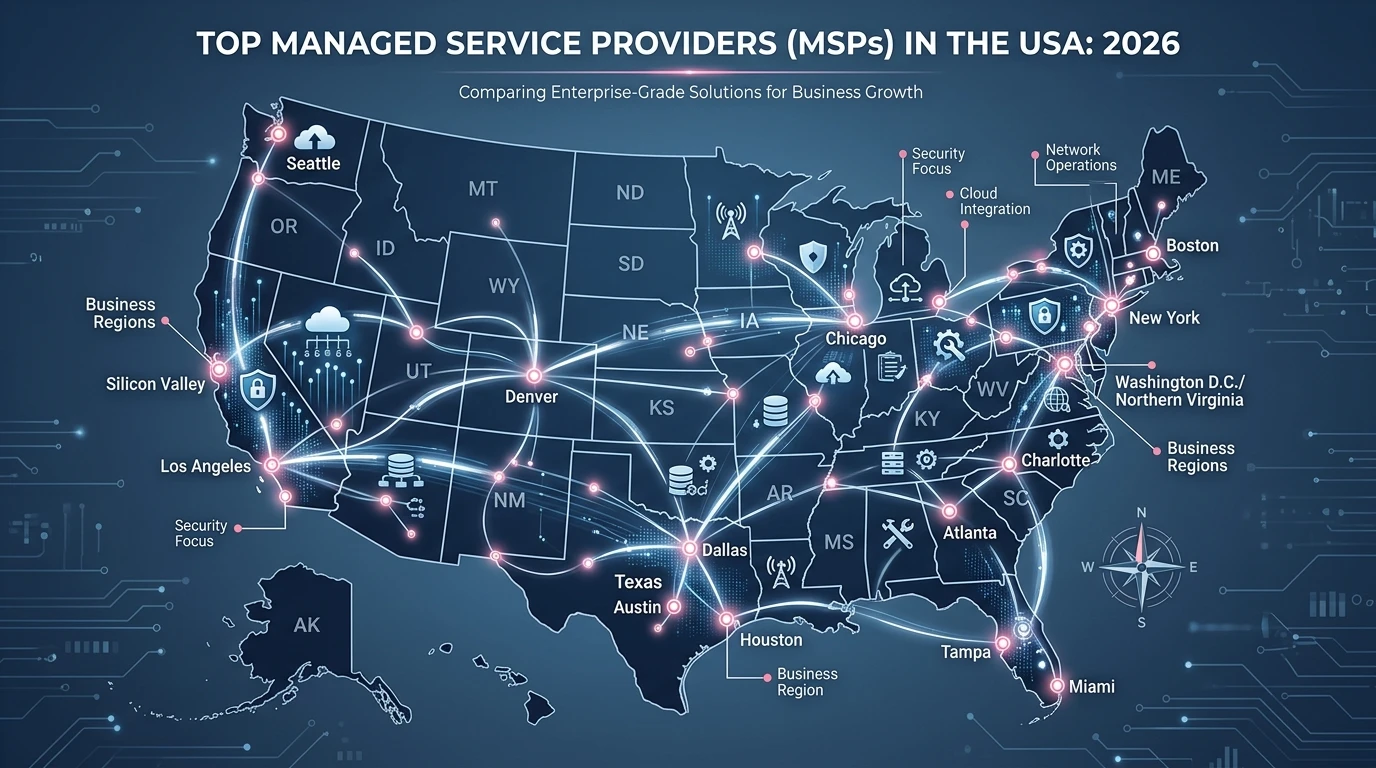
Regional Nuances: Why Geography Dictates MSP Selection
While cloud architecture allows for remote management, physical geography still plays a critical role when evaluating the best MSP companies. Proximity influences on-site emergency response times, local regulatory expertise, data sovereignty mandates, and deep alignment with regional economic sectors.
The choice of partner often depends on the specific commercial hub an enterprise calls home:
- The East Coast Powerhouses (New York, Boston, Washington): In dense financial and regulatory epicenters like New York and Boston, MSPs must possess deep expertise in stringent fiscal compliance and low-latency infrastructure. Meanwhile, providers serving Washington must be thoroughly versed in public sector benchmarks and federal defense-in-depth security expectations.
- The Technology and Innovation Belts (California, Seattle): Operating out of major tech hubs like San Francisco, Los Angeles, and Seattle requires cloud managed service providers to be exceptionally agile. These partners must seamlessly integrate with cutting-edge software development pipelines, DevOps methodologies, and hyperscale environments.
- The Rising Enterprise Corridors (Texas, Colorado, Georgia): Fast-growing corporate clusters across Texas (including Austin and Dallas), Denver, and Atlanta demand enterprise IT support capable of managing rapid, massive scaling. These regions require a delicate balance of physical data centre footprint and agile cloud integration.
- The Logistics and Healthcare Hubs (Chicago, Florida): Chicago’s heavy industrial and supply-chain focus demands bulletproof backup and disaster recovery mechanisms to prevent costly operational downtime. Down in Florida, particularly in Miami’s thriving international commerce scene, IT support providers must offer highly resilient, distributed network solutions capable of enduring seasonal weather disruptions while maintaining constant connectivity.
To make an informed decision, organizations can cross-reference geographic capabilities through a comprehensive MSP database to map out localized technical strengths.
Beyond regional location, evaluating a provider’s true capacity requires looking closely at their operational frameworks, core specialisms, and how they handle complex vendor ecosystems.
What Makes an MSP Worth Watching in 2026?
Vetting an external technology partner has evolved far beyond reviewing a standard portfolio or checking a few client references. For sophisticated enterprise buyers, identifying the Top Managed Service Providers in the USA: Best MSP Companies to Watch in 2026 requires an evaluation framework that focuses heavily on operational depth and long-term viability.
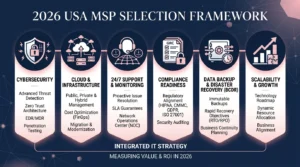
The industry leaders separating themselves from the pack display several core capabilities:
- Service Depth and Core Infrastructure Capability: High-tier providers do not merely patch existing setups; they architect forward-looking environments. This involves deep proficiency across multi-cloud ecosystem orchestration, automated resource provisioning, and continuous infrastructure stability.
- Cybersecurity Maturity: True maturity means moving past basic reactive monitoring. Elite providers align their operational workflows directly with established industry standards, such as the NIST Cybersecurity Framework. They design their services around proactive threat hunting, endpoint detection, and secure identity management architectures.
- Response Time and SLA Clarity: Enterprise buyers prioritize partners who replace vague response windows with precise, tier-based Service Level Agreements (SLAs). These frameworks should clearly distinguish between simple helpdesk support tickets and critical, systemic infrastructure issues.
- Compliance Awareness and Data Sovereignty: In an era of strict data privacy mandates, a capable provider understands the technical foundations of compliance readiness. Whether navigating complex healthcare requirements or regional financial directives, they build systems that simplify auditing processes, though smart businesses should always verify specific regulatory positions with qualified legal advisors.
- Backup, Disaster Recovery, and Resilience: Modern business continuity demands comprehensive data protection. This means immutable backups, routine failover testing, and rapid recovery time objectives that protect an enterprise against prolonged, costly operational downtime.
- Support for Distributed Teams and Co-Managed IT: The modern workforce is decentralized. Leading providers excel at securing and supporting remote end-points, while also showing the flexibility to collaborate seamlessly alongside an organization’s existing internal IT departments.
- Transparent Onboarding: A successful partnership begins with a structured, highly visible transition process. Exceptional providers prioritize clear asset discovery, documentation centralisation, and minimal disruption to daily workflows during the initial integration phases.
Strategic Alignment Across Key US Business Hubs
Geographic concentration often dictates the technical specialisms an MSP develops. Different commercial regions across the United States place distinct operational demands on their technology partners:
In New York, the corporate environment is shaped by fast-paced financial institutions, major corporate legal practices, and sprawling enterprise software platforms. MSPs operating in this corridor must focus on low-latency network architectures, strict data lifecycle management, and high-level cybersecurity protocols. Conversely, California’s landscape, centered around Silicon Valley, San Francisco, and Los Angeles, demands a completely different technical focus. Here, providers must display deep fluency in rapid cloud-native scaling, advanced artificial intelligence infrastructure integration, and specialized technical architectures tailored to fast-growing SaaS startups, digital media enterprises, and cutting-edge healthcare technology firms.
Further south, Texas has established itself as a massive engine for energy, advanced manufacturing, multinational logistics, and rapid mid-market corporate expansion. Providers supporting hubs like Austin, Houston, and Dallas must master industrial automation networks, complex supply-chain architectures, and large-scale data migrations. Meanwhile, Florida’s business ecosystem, stretching from Miami to Orlando, features a unique mix of large-scale healthcare networks, real-estate conglomerates, hospitality operations, and international trade. Technology providers in this region must deliver highly resilient, distributed cloud solutions designed to maintain constant uptime despite regional weather disruptions.
In the Midwest, Chicago remains a critical command center for manufacturing, heavy logistics, institutional finance, and professional services. MSPs here must excel at bridging legacy operational technology (OT) with modern cloud infrastructure, ensuring uninterrupted visibility across complex distribution networks. Finally, in the Pacific Northwest and the capital corridors, Washington and Seattle represent the global baseline for cloud platforms, enterprise software engineering, and aerospace technology. Providers in these regions must be highly specialised masters of complex cloud deployments, advanced data analytics environments, and strict security practices that align with federal guidelines, such as the CISA guidance for MSPs and customers.
To navigate these regional variances effectively, procurement leaders frequently leverage a trusted managed service providers network to identify which firms possess localized, sector-specific operational experience.
Vetting by Use Case Over Brand Recognition
A common misstep for technology buyers is choosing a provider based solely on market longevity or generic brand size. The most successful partnerships are built on specific technical use cases. A provider that excels at managing a traditional on-premise infrastructure for a regional manufacturer may struggle to support a highly distributed, cloud-native financial services firm. Enterprises should categorise their primary technical needs, whether they require dedicated cybersecurity MSPs, specialised cloud managed service providers, or a balanced co-managed IT framework, before initiating deep contract negotiations. Utilizing targeted directories for managed IT services USA allows teams to filter potential partners by their verified technical capabilities rather than marketing claims.
The Intelligence Advantage for B2B Technology Vendors
While technology buyers focus heavily on vendor selection, a parallel challenge exists for B2B technology vendors selling directly into the channel. For these organisations, accessing precise, high-fidelity market data is essential for accurate territory mapping and account-based marketing campaigns. Relying on outdated contact lists often leads to wasted sales cycles and compliance risks, particularly when navigating commercial messaging regulations like the FTC CAN-SPAM guide. Partnering with elite technographic data providers USA ensures that software and hardware vendors can identify exactly which MSPs manage specific tech stacks, allowing for highly relevant, value-driven outreach.
The final section of this guide will outline the practical steps enterprise decision-makers should take to shortlist candidates, how data-driven selection platforms remove risk from the procurement process, and why 2026 will reward organisations that treat IT procurement as a core strategic discipline.
How to Shortlist the Right MSP Company in the USA
Moving from a long list of potential vendors to a targeted shortlist requires a systematic, objective filtering process. For an organisation to protect its operational infrastructure, procurement teams must look past polished sales pitches and focus strictly on verified technical capabilities.
A reliable, risk-mitigated shortlisting framework involves nine key steps:
- Define Your Core Business Need: Determine if your primary goal is comprehensive IT outsourcing, targeted co-managed IT to support an existing team, or a specialised deployment like migrating to a multi-cloud environment.
- Choose the Appropriate Coverage Scale: Decide whether your operations are best served by a localized boutique partner for high-touch local support, a regional provider with deep regional business hub expertise, or a massive nationwide provider built for multi-state scalability.
- Audit Cybersecurity and Backup Capability: Verify that the provider treats security as a foundational layer rather than an afterthought. Look for alignment with frameworks like the NIST Cybersecurity Framework, and ensure they offer automated, immutable backup and disaster recovery solutions.
- Demand SLA and Support Model Clarity: Request explicit definitions for response times, resolution paths, and critical escalation tiers. Ensure their support availability matches your operational hours, especially if you manage distributed teams across multiple time zones.
- Evaluate Cloud and Infrastructure Depth: Assess their engineering experience with your exact infrastructure, whether you operate on public cloud platforms, private servers, or complex hybrid systems.
- Review Proven Industry Experience: Prioritise providers who already manage infrastructure for companies within your specific sector, ensuring they understand your daily workflows, common software integrations, and operational pain points.
- Understand the Onboarding Process: Ask for a detailed, phase-by-phase breakdown of their transition methodology to ensure asset discovery and documentation centralisation occur without disrupting business continuity.
- Assess Communication and Account Governance: Evaluate the responsiveness of their technical account managers and the transparency of their reporting dashboards during the initial consulting stages.
- Establish Compliance and Data Handling Expectations: Clearly communicate your data sovereignty, retention, and regulatory compliance needs, ensuring the partner can build architectures that support these requirements.
When evaluating vendors against these criteria, relying on a verified MSP directory for top managed service providers helps decision-makers strip away marketing noise and focus entirely on objective operational data.
The managed services market is not only a critical resource for technology buyers; it is also an incredibly lucrative channel for B2B vendors, SaaS companies, cybersecurity providers, cloud infrastructure firms, and specialised equipment manufacturers. However, breaking into the MSP channel requires an entirely different approach than traditional enterprise sales.
MSPs operate on strict efficiency metrics and predictable margins. They are highly protective of their client environments and are rarely influenced by generic, un-targeted sales outreach. To build meaningful partnerships, B2B sales teams must understand an MSP’s existing technical profile, geographic reach, and underlying client verticals before making contact.
Whether your organisation operates as a specialized software vendor or collaborates with value added resellers to distribute complex hardware, utilizing data-driven B2B MSP intelligence is vital. Accessing clean market insights helps sales teams map out tech stacks, identify gaps in a provider’s portfolio, and structure conversations around genuine business value rather than cold introductions.
Leveraging Intelligent Data Platforms for Discovery and Research
Whether you are a corporate technology buyer shortlisting engineering partners or a B2B vendor researching channel accounts, manual market mapping is an incredibly inefficient use of corporate resources. The sheer volume of MSP companies in the USA makes unassisted comparison prone to oversight.
Data-driven discovery platforms remove this friction. DiscoverMSPs serves as an independent intelligence resource built to streamline this entire ecosystem. For procurement heads, the platform provides a clear path to discover, filter, and analyze providers based on their actual location, industry alignment, and technical specialisms. For B2B organizations seeking verified MSP contacts, the database provides the targeted technographic insights necessary to conduct clean, relevant market research. By bringing transparency to the channel, the platform ensures that commercial partnerships are built on technical alignment rather than guesswork.
Organizations looking to simplify their technology sourcing can easily contact DiscoverMSPs to access tailored database insights, with the complete assurance that all research and data aggregation strictly mirror modern data protection and privacy practices.
Frequently Asked Questions
How accurate is DiscoverMSPs’ data?
How often is DiscoverMSPs’ data refreshed?
Can I get a free sample before committing?
Is DiscoverMSPs’ data compliant with outbound marketing regulations?
How quickly can I get a custom data list from DiscoverMSPs?
Does DiscoverMSPs offer data outside the USA?
1. What are the top managed service providers in the USA?
The top managed service providers are elite external technology organizations that move beyond basic helpdesk support to offer comprehensive, high-tier technical oversight. The best MSP companies are characterized by their deep maturity across cloud managed service providers workflows, proactive security architectures, and verified experience managing complex infrastructures across major USA business hubs.
2. How do I choose the right MSP company for my business?
Choosing the right provider requires a structured framework that looks closely at service depth, cybersecurity maturity, and SLA clarity. Rather than selecting a partner based purely on brand name, organizations should match their specific corporate use case with a provider’s verified industry experience, compliance awareness, and co-managed IT capabilities.
3. Which USA cities have strong MSP ecosystems?
Major corporate corridors across the country hold highly advanced MSP ecosystems, each tailored to local economic demands. Highly sophisticated technical clusters thrive throughout New York, California (including San Francisco and Los Angeles), Texas (Austin and Dallas), Florida (Miami), Chicago, Washington, and Seattle, offering diverse enterprise IT support options.
4. Why should vendors use MSP intelligence before outreach?
MSP principals are consistently busy and resistant to generic, cold sales pitches. Utilizing high-fidelity market intelligence allows B2B vendors to understand a provider’s active tech stack, geographic footprint, and core specialisms in advance. This ensures that any partnership proposal is highly relevant, legally compliant with commercial messaging guidelines, and focused on clear commercial value.
Conclusion: Driving Growth Through Technical Alignment
As modern corporate operations become inextricably linked with cloud architecture, distributed networks, and escalating threat landscapes, the role of the external IT partner has been permanently elevated. Infrastructure stability is no longer an isolated technical concern; it is a fundamental business driver that directly impacts an organization’s competitive edge, compliance posture, and bottom-line efficiency.
Selecting from the Top Managed Service Providers in the USA: Best MSP Companies to Watch in 2026 is one of the most critical decisions an executive team can make. The organizations that thrive in this environment will be those that reject generic, reactive IT outsourcing and instead invest the time to vet, shortlist, and secure highly specialized partners, such as dedicated managed security service providers, who truly understand the scale of modern enterprise architecture. By approaching procurement with a structured, data-driven mindset, technology buyers can turn their IT infrastructure from a complex operational challenge into a powerful foundation for long-term corporate growth. To begin filtering verified partners by region, technical specialism, and operational scale, explore the comprehensive DiscoverMSPs Directory today.